

Welcome to our Year 2 page!
Meet the team:
Miss Wiggins - Class Teacher
Mrs Allen - Learning Support Teacher
What do the children need to bring to school every day?
- Reading book and diary - Reading books will be changed every Wednesday.
- Water bottle containing only water (We have lots of filling stations in school.)
- A proper coat (not a hoodie or Jacket)
PE
PE is on a Tuesday.
The children are to come to school every Tuesday in a school PE kit instead of their usual school uniform.
They must be in the correct PE kit.
They need to wear:
- Navy blue sweater or St. Paul’s sweatshirt (no hoodies)
- White polo shirt or crew neck t-shirt
- Navy or black joggers
- Trainers
Forest School - TBD
Our Class saint:
St Teresa of Calcutta
She was educated at the nearby convent school and she went on a trip to the Church of the Black Madonna in Letnice when she was 12. Later she became a nun, travelling to Dublin, Ireland, to join the Sisters of Loreto. She became known as Sister Mary Teresa.
Her novitiate period began in Darjeeling, India. She was sent on to Saint Mary's High School for Girls, in Kolkata, where she taught girls from the city’s poorest families. Since she would be based in India, she learned to speak the local languages fluently. When she took her final vows to live a life of poverty, chastity and obedience, she became known as ‘Mother’ as was usual with the Loreto order. She rose to become the Principal of the school in 1944. Her idea was to remove poverty from the students’ lives through education.
She convinced the city to donate an abandoned building, and there she set about creating a home for the city’s destitute. She also set up an open-air school under her new congregation, the Missionaries of Charity. Her work expanded visibly and she became known for her stellar work.
She established a leper colony, an orphanage, a nursing home, a family clinic and mobile health clinics in the city. Her efforts at providing effective care for the poor and unwanted garnered attention from Pope Paul VI, who conferred the Decree of Praise upon the Missionaries of Charity. In 1979, she was awarded the Nobel Peace Prize for her outstanding efforts to alleviate human suffering.
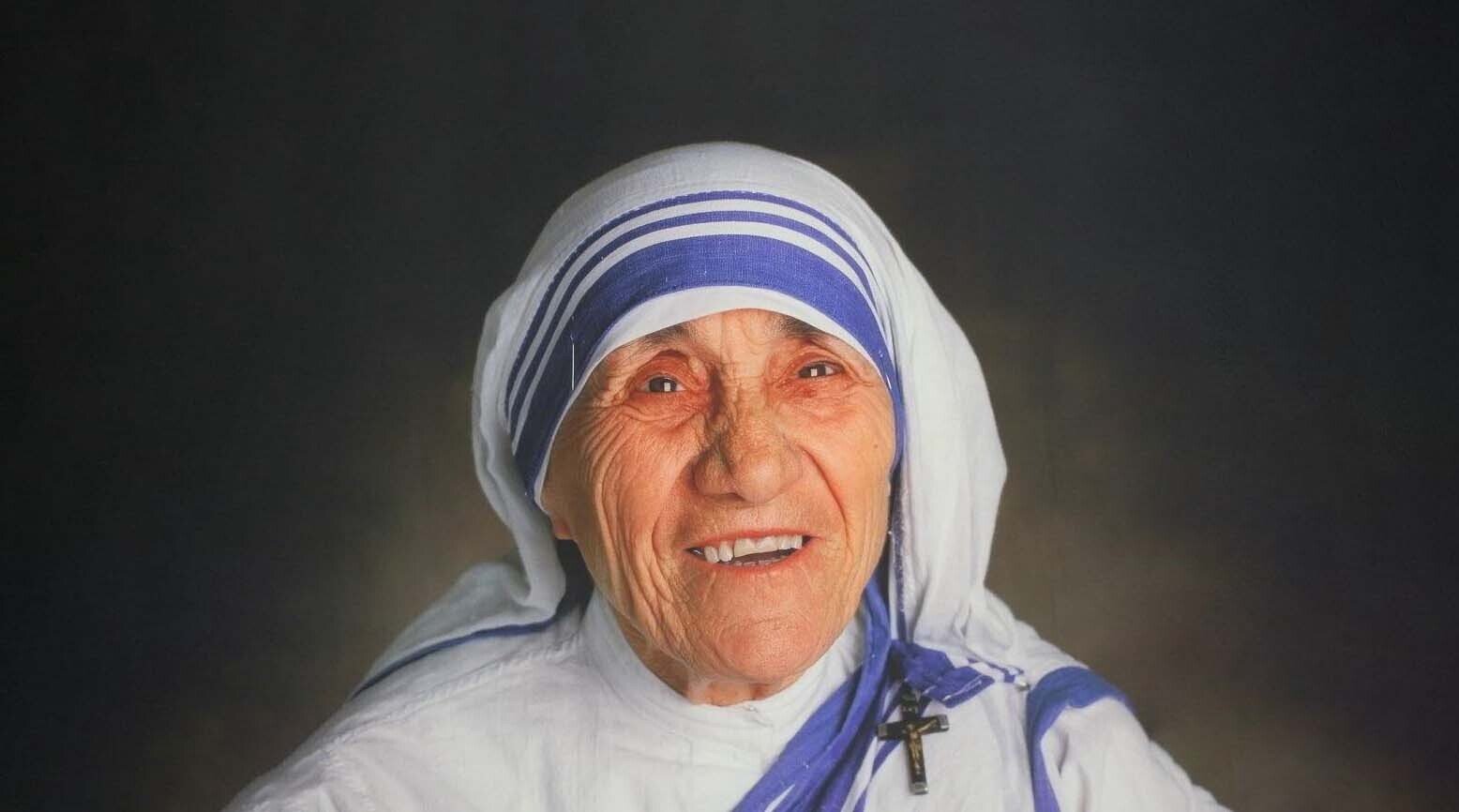
Quote:
“Spread love everywhere you go. Let no one ever come to you without leaving happier.”
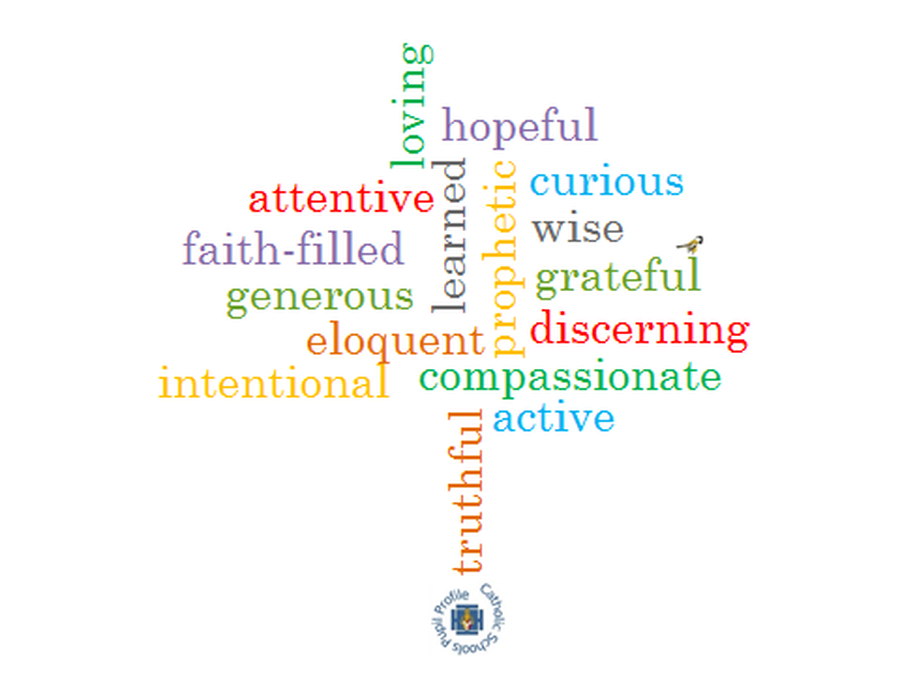
This half term, we are focusing on the virtues of Compassionate and Loving.

Catholic Social Teaching:

“Whatever you do, work at it with all your heart, as working for the Lord.”
(Colossians 3:23)
This Bible scripture teaches that all work is important and valuable. It reminds us that when people do their jobs or help others, they are serving God. In a Catholic school, this shows the dignity of work because it helps children understand that everyone’s work matters, whether it is learning, helping at home, or doing a job. When people work hard and do their best, they are respecting themselves and others and following God’s way.
Reading
The Year 2 curriculum in focused on building the children’s stamina, fluency and expression and developing the children’s understanding of what they are reading. They must be able to talk about the book that they reading confidently and answer questions referring back to the text to help them.
The children need to read at home every day and need to increase the amount that they can read in one go.
In school, we will hear every child read his/her reading book as often as we can each week. We will check for fluency and expression and ask questions to make sure that he/she understands the text. We will change books as soon as it is finished and we are happy with the reading and understanding.
The children also do:
- Guided Reading
- Modelled and Shared Reading
- Reading Aloud (story time)
- Independent Reading for Pleasure

Spelling
One of the main aims of Year 2 is to teach the children to be accurate spellers.
In Reception and Year 1, the children sound out the words that they want to write and as long as they write the correct sounds, it doesn’t matter if the graphemes aren’t correct.
However, as the children begin to learn alternative graphemes used to spell words, they are expected to try out such graphemes and decide which best fits the word they are writing. Therefore, their spelling should become more accurate throughout the year.
Homework
Spellings - Weekly Journals – There is a spelling test every Friday.
Reading Book- Daily and comment in diary.
Autumn 1-
RE-
This half term, the children will be learning about Creation and Covenant. They will explore the Christian belief that God created the world and that creation is a special gift from God. Through Bible stories, including the story of Noah and the Ark, children will learn that God loves and cares for all people and creation. They will discover how God made a special promise, called a covenant, with Noah after the flood and how the rainbow is a sign of this promise.
The children will be encouraged to think about how they can care for God's world and show love and respect for others. They will reflect on ways they can be good stewards of creation by looking after the environment, caring for living things, and making thoughtful choices in their daily lives. Through discussion, prayer, and creative activities, they will develop their understanding of God's love, promises, and our responsibility to care for the world and one another.
English
This half term, children will be narrative writing. We aim to write creative stories that aim to entertain the reader! Children will be encouraged to use a range of adjectives, adverbs, coordinating conjunctions (and, but, or) and subordinating conjunctions (when, if, that, because) in their writing.
Maths
Place Value:
This half term, the children will be learning about place value. They will develop their understanding of numbers by reading, writing, ordering, and comparing numbers within 100. The children will explore how numbers are made up of tens and ones, helping them to recognise the value of each digit in a number. They will use practical resources, pictures, and number lines to build and represent numbers in different ways.
Throughout the unit, children will practise counting forwards and backwards, identifying one more and one less than a given number, and comparing numbers using mathematical vocabulary such as greater than, less than, and equal to. They will also solve simple reasoning and problem-solving activities to explain their thinking and deepen their understanding. By the end of the unit, children will have developed confidence with numbers and a secure foundation for future learning in addition, subtraction, and other areas of mathematics.
Science - Matirals

KNOWLEDGE BASED CURRICULUM
Our knowledge based curriculum will ensure that all of our children have strong foundations in every subject throughout the year at varying times.
Geography
Spatial senses -
We will be developing their spatial sense, which is their understanding of the world around them and how places are connected. They will learn to identify and describe the location of objects and places using geographical vocabulary such as left, right, near, far, north, south, east, and west. The children will explore maps, aerial photographs, and simple plans to help them understand where places are and how to find their way around.
Throughout the unit, children will investigate their school and local area, learning to recognise key features and landmarks. They will practise using simple maps and routes, develop their observational skills, and begin to understand how places can be represented in different ways. Through practical activities and exploration, children will build confidence in describing locations, giving directions, and understanding the spaces and environments that are important to them.

Art
Children learn how artists create pictures of people. They explore portraits of themselves and others, focusing on facial features such as eyes, nose, mouth, and hair. Children practise looking closely at faces and learn how to draw and paint shapes, lines, and colours to represent people. The unit helps children express ideas and feelings through art while developing observation skills and confidence in using different materials and techniques.
If you have any questions or if there is anything that I can help you with, please speak to me at the end of the day.
Miss Wiggins


